What is Education Transformation Post COVID-19?
The educational landscape will never be the same as a result of COVID 19. Due to a lack of students and teachers, schools are closing. Instead of sending their children to risky public schools, parents are opting to homeschool them. Some people find it challenging to comprehend how education has changed since the epidemic. Students frequently ponder the future of education in the wake of COVID-19. As a result, we have compiled seven ways that education will change in the future.
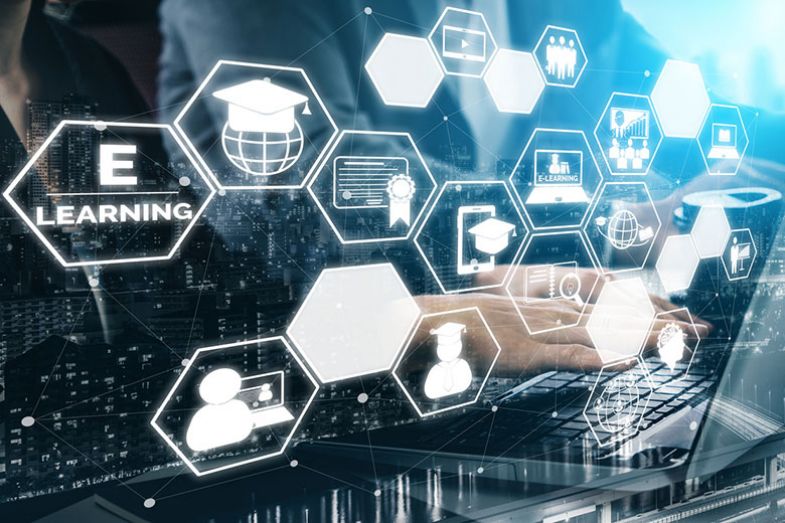
Remote learning was required in schools this year due to required closures. To continue teaching, educators used video conferencing, online learning management systems, and other digital tools. Here are a few ways that students and teachers alike embraced change in the wake of these recent developments.
Education Transformation Post COVID-19: Online Courses
Anyone with an internet connection could receive education thanks to massive open online courses (MOOCs). MOOCs are also one of the few educational formats that can cross national boundaries and reach students in regions impacted by calamities or unstable governments. However, MOOCs during COVID 19 decentralized education. Although there were fewer teachers and schools closed, education continued thanks to these online resources.
Udemy’s report indicates that enrollment increased by 400% between February and March of that year. Courses in art, technical drawing, Adobe Illustration, and coding are a few of the subjects that have become quite popular among students. Numerous organizations are now looking beyond simply educating college students as the pandemic takes its toll. In order to assist adults, they are now investing in custom tailoring classes.
Homeschooling Becoming the New Trend
Following COVID 19, homeschooling has gained popularity. Due to this pandemic, parents are opting to homeschool their kids rather than enrolling them in risky public schools. In comparison to other groups, homeschooled students have also demonstrated superior performance on standardized tests. It should come as no surprise that homeschooling has gained popularity given how quickly education is changing. The introduction of antiviral medications, however, will turn this new educational framework on its head and result in an equal number of students attending public schools.
The Dread of Students Never Returning Back to School
There has been much discussion about how education has changed since COVID-19 and how it will continue to change. Many students live in fear of never going back to school, which increases the value of education more than ever.
More than 278 million students have already left high-quality schools in the past 20 years. There is a worry that millions more people will decide against returning as a result of financial setbacks and global economic decline.
Education impacts everything from our economy to our social life because it provides us with knowledge, but education post COVID-19 is different. It will be more individualized than ever before because it is decentralized.
Virtual & Augmented Reality Will Take Over Education
Students can more effectively engage with the educational material in a 3D world created by virtual reality. In addition, augmented reality will help us incorporate learning into our daily lives. Therefore, by adding education to objects in physical space such as buildings, books and more.
A platform for education called Google Expedition offers both augmented reality and virtual reality. Similar to this, MEL Science, based in the UK, encourages students to learn in novel ways by using a VR headset and a physical education kit that includes immersive games, simulations, and more.
Students will need the most recent smartphones, computers, educational apps, and more to use AR and VR technology. Due to their financial situation, the majority of students won’t have access to these technologies because the education system will be decentralized after COVID 19.
Biometrics & Facial Recognition Can Increase Student Safety
All aspects of schools can benefit from biometric technologies. These tools scan the face, fingers, and other body parts like the eyes. The use of technology makes student attendance and identity more reliable. Also, most importantly it can increase safety as well by enabling minimal contact.
The security and safety of children on campuses can also be improved with the aid of such technologies. For instance, thumbprints & facial recognition will keep schools & parents informed students are inside the campus.
The Paris School of Business utilizes LCA Learning’s Nestor software which, among other things, takes notice of and alerts students when they may have lost focus during a remote class. Similar to this, a professor in China uses facial recognition technology to assess the interest of his students during lectures.
Concluding Thoughts
Transformation of Education Education after COVID-19 will look very different from education before it. Due to the lack of both students and teachers, education will become more decentralized. Many educators are concerned that as public investment in education declines, the quality will as well.
With the ability to interact with education in a novel way and at their own pace, virtual reality and augmented reality technology may play a bigger role in education. Additionally, despite the fact that not everyone will have access to this technology, it will still be able to increase safety by using biometric recognition and facial scanning technologies, as well as provide education that was not possible before COVID 19.
Bryan Barnes
On a variety of topics that have an impact on education, Jessica writes informative articles. Her writing, which is informed by her own personal beliefs, appeals to both younger and older adults. Her experience includes more than 3 years as a writer and researcher covering topics like education, studies, and products for graduates. She also has self-taught journalism courses under her belt.

Copyright © 2022 PerBased